
 Image 1 of 2
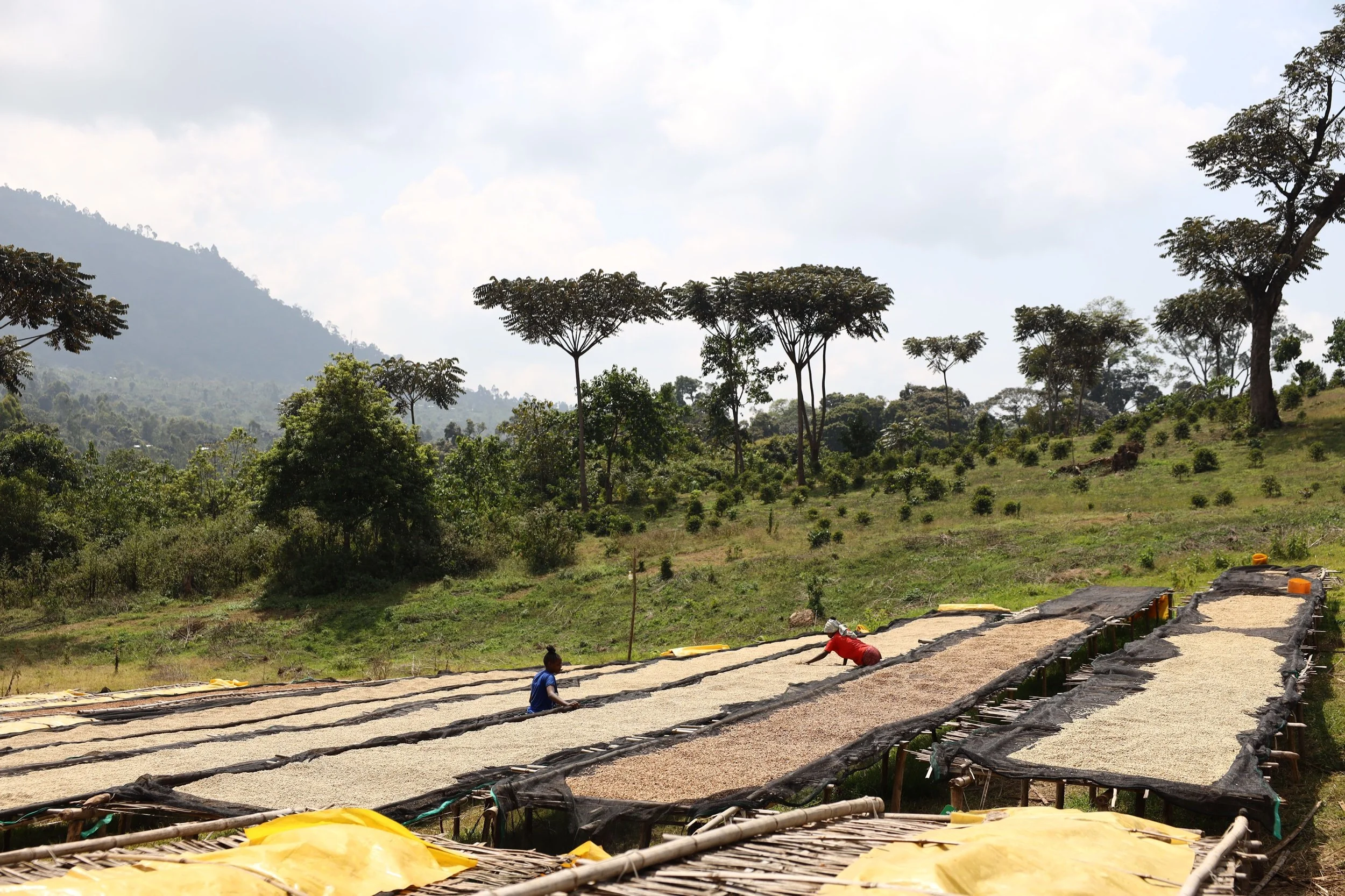 Image 2 of 2
Ethiopia - Sidama Buncho G1
Washing Station: Buncho Station
Varietals: JARC Selection 74158
Processing: Fully Washed
Altitude: 2,260 to 2,360 meters above sea level
Town: Shantawene
Region: Sudan’s
Country: Ethiopia
Total size of farm: Less than 5 hectares on average
Number of Producers: 940 smalholders
Additional information:
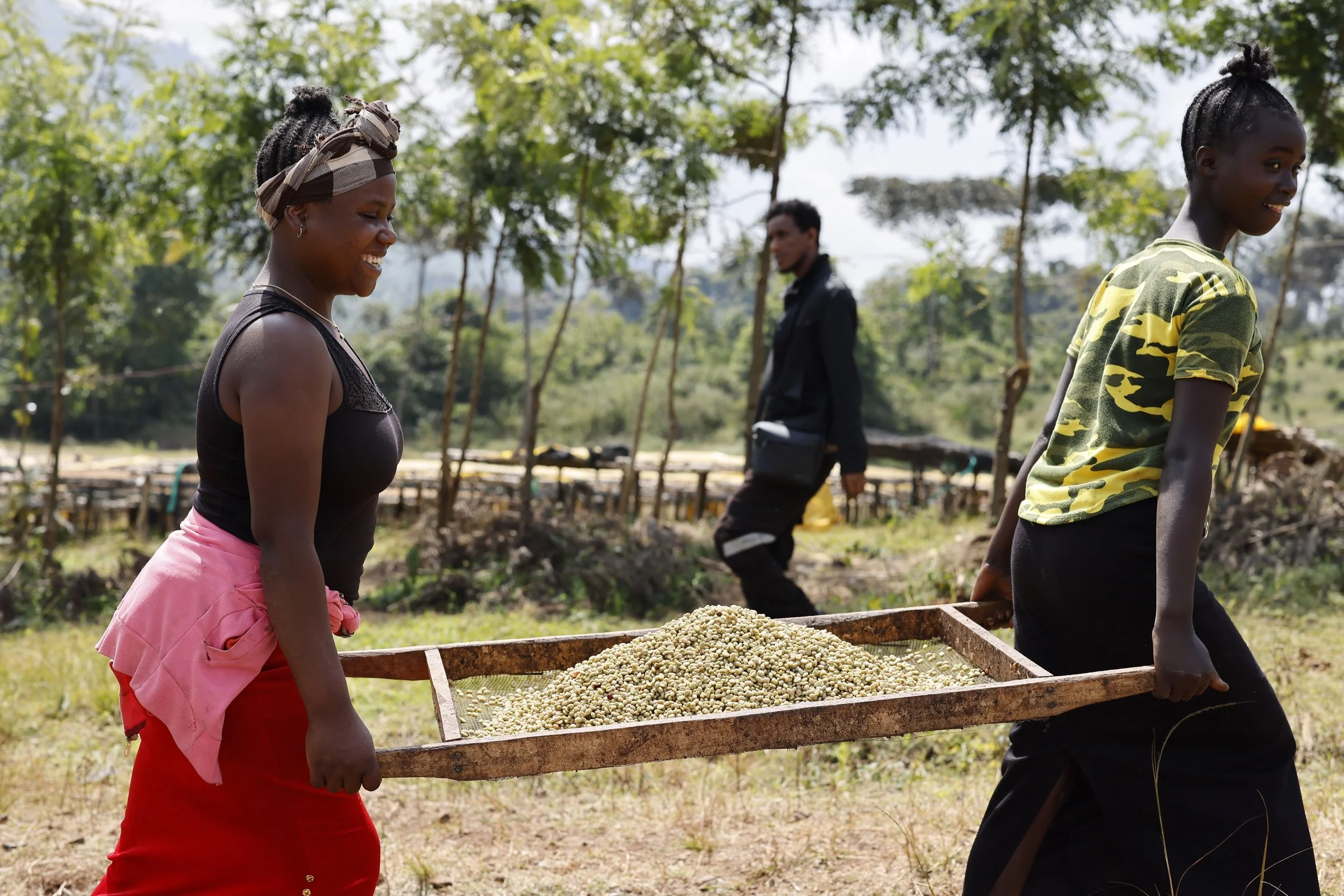
High up in the rich area of Shantawene area collection of smallholder coffee producers within the Sidama region. The Buncho Washing Station run by Daye Bensa. The owner of the mill, Asefa Dukamo realized that there were not many washing stations nearby, and he had to travel great distances to deliver his coffee. Thus began the idea to construct his own washing station to reduce the travel time for coffee producers in his region.
In 1997, he constructed a washing station in the Girja village, less than one mile from his parents' house. The following year, another washing station was constructed in Eltama, 30 kms from Girja. Dukamo then moved to the Daye town in the Bensa district, setting up the mother washing station called Qonqana. Eventually. a dry mill was added to provide facilites for naturally processed coffees. Asefa's younger brother, Mulugeta Dukamo, is the co-founder of Daye Bensa Coffee exporters, and played a key role in the expansion of the washing stations. Today, Daye Bensa operates in six woredas: Bensa, Bura, Chabe, Hoko (Girja), Aroressa and Chire with 20 washing stations, five mills and three coffee farms.
As well as coffee, producers in the region will plant other crops such as sugacane, a variety of fruits and
"Inset"; a common indigenous plant that can be prepared as food in different forms. Income from coffee is important, but minimal for most farmers due to the small size of their farms. As such, inputs are minimal - most coffee grown in the region is 100% organic, though not certified due to high certification costs, as farmers simply do not nave ine money to apply chemical temllzers, pesticides, or neroicides
Producers working with the Buncho Station face a number of obstacles when growing coffee. This includes a lack of access to electricity, water, telecommunication, and road access. In addition, producers in the region suffer from reduced exposure to knowledge on the best coffee farming practices which can directly impact yield and quality.
Ethiopia - Sidama Buncho G1
Washing Station: Buncho Station
Varietals: JARC Selection 74158
Processing: Fully Washed
Altitude: 2,260 to 2,360 meters above sea level
Town: Shantawene
Region: Sudan’s
Country: Ethiopia
Total size of farm: Less than 5 hectares on average
Number of Producers: 940 smalholders
Additional information:
High up in the rich area of Shantawene area collection of smallholder coffee producers within the Sidama region. The Buncho Washing Station run by Daye Bensa. The owner of the mill, Asefa Dukamo realized that there were not many washing stations nearby, and he had to travel great distances to deliver his coffee. Thus began the idea to construct his own washing station to reduce the travel time for coffee producers in his region.
In 1997, he constructed a washing station in the Girja village, less than one mile from his parents' house. The following year, another washing station was constructed in Eltama, 30 kms from Girja. Dukamo then moved to the Daye town in the Bensa district, setting up the mother washing station called Qonqana. Eventually. a dry mill was added to provide facilites for naturally processed coffees. Asefa's younger brother, Mulugeta Dukamo, is the co-founder of Daye Bensa Coffee exporters, and played a key role in the expansion of the washing stations. Today, Daye Bensa operates in six woredas: Bensa, Bura, Chabe, Hoko (Girja), Aroressa and Chire with 20 washing stations, five mills and three coffee farms.
As well as coffee, producers in the region will plant other crops such as sugacane, a variety of fruits and
"Inset"; a common indigenous plant that can be prepared as food in different forms. Income from coffee is important, but minimal for most farmers due to the small size of their farms. As such, inputs are minimal - most coffee grown in the region is 100% organic, though not certified due to high certification costs, as farmers simply do not nave ine money to apply chemical temllzers, pesticides, or neroicides
Producers working with the Buncho Station face a number of obstacles when growing coffee. This includes a lack of access to electricity, water, telecommunication, and road access. In addition, producers in the region suffer from reduced exposure to knowledge on the best coffee farming practices which can directly impact yield and quality.